

Create a custom job
- In Sidecar, select Agents.
- Open the agent that should perform the work.
- Click New job.
- Complete the form.
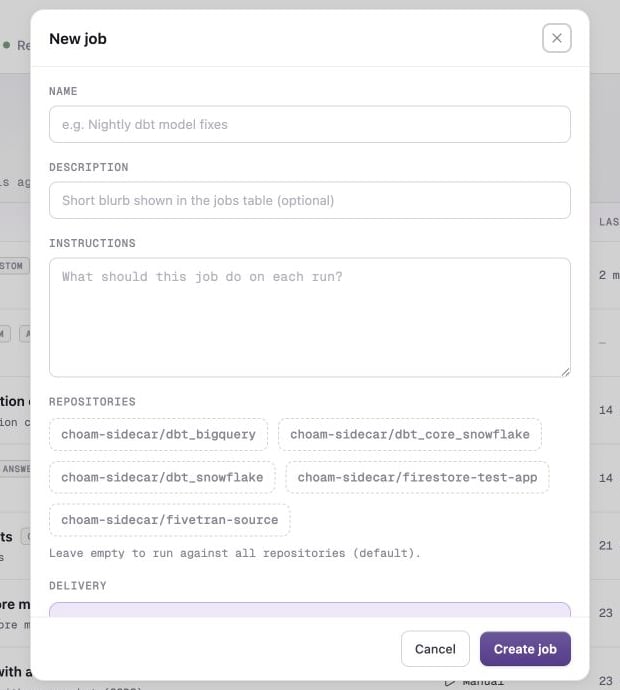
Start with a custom job when you need your own instructions and scope.
Name and description
Use a name that describes a repeatable outcome. The optional description appears in the job list.Instructions
Describe what the agent should do on every run. State the target, expected result, validation, and important boundaries.Repositories
Select one or more repositories, or leave the selection empty to use all currently accessible repositories. Learn how the scope changes over time in Configure a job.Delivery
Available options depend on the agent’s repository requirements:- Open a pull request
- Push to a branch
- Text response in Agent Console
Trigger
Choose:- Manual — the job runs only when an Account Admin clicks Run now.
- Scheduled — the job runs on an interval, at specific hours, or from a cron expression. Run now remains available.
MCP servers and tool permissions are not part of the New job dialog. Configure
them after Sidecar creates the job.
From a preset
Agents with released presets show From preset beside New job.- Click From preset.
- Review the preset’s resources, trigger, and starting state.
- Add the preset.
- Open the installed job and review its readiness, MCP selection, tool permissions, and active state.
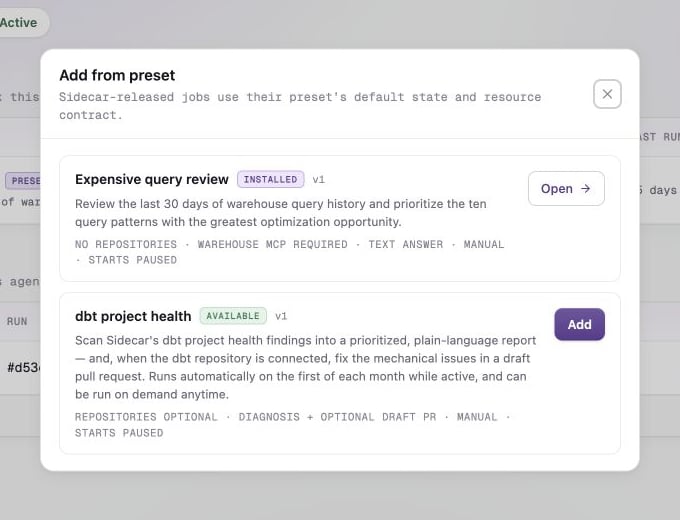
The preset catalog distinguishes installed workflows from presets you can add.
From a template
A template is a read-only definition that never runs directly.- Click From preset.
- Click View template.
- Review the fixed workflow.
- Click Duplicate.
- Configure and activate the new copy.
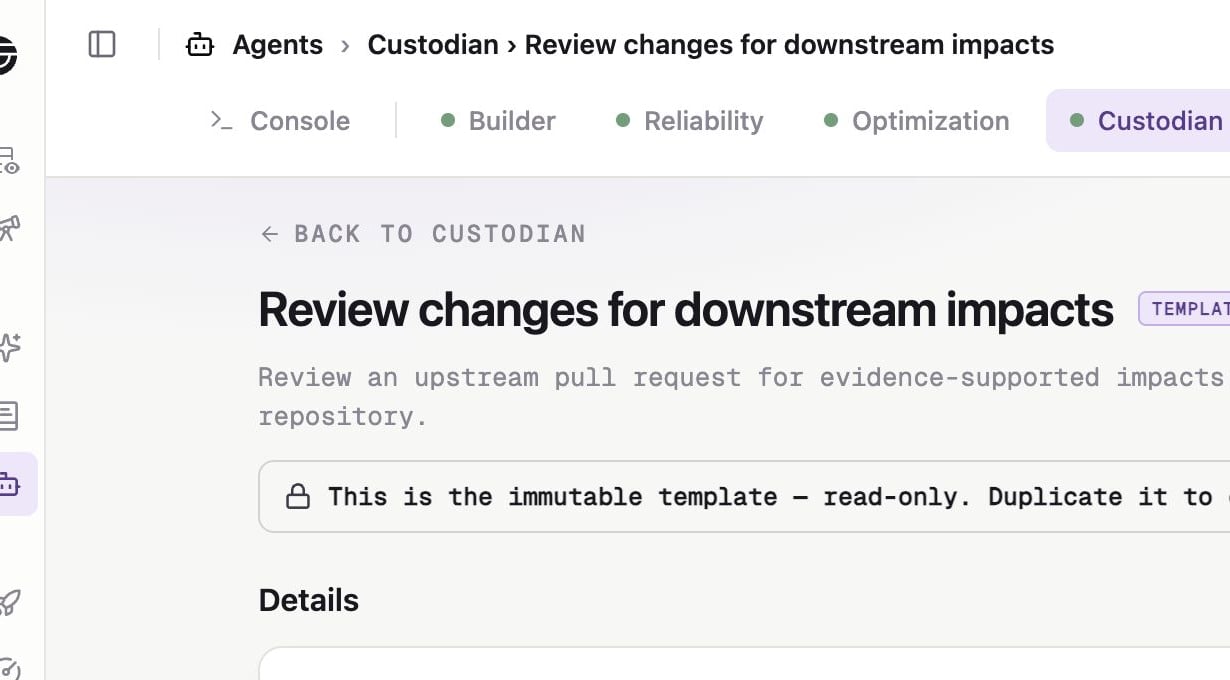
The Custodian template is read-only until you duplicate it.